
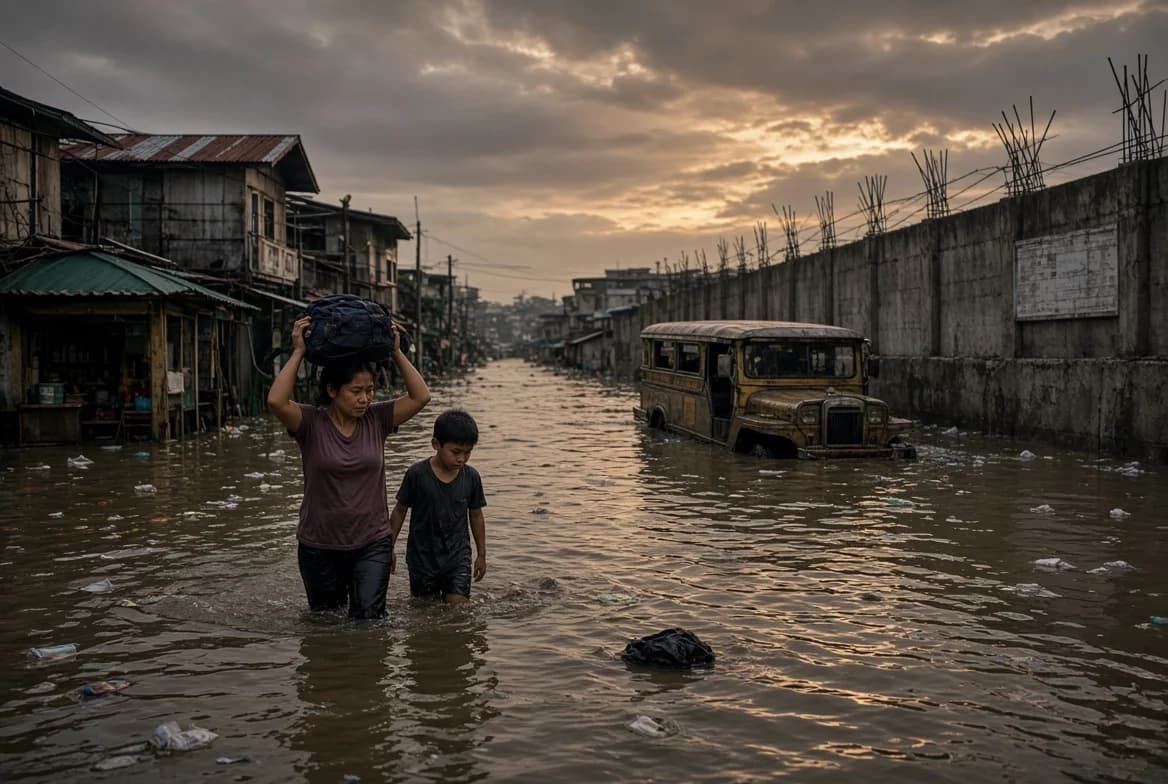
Floodwater is wonderfully honest about trash. A plastic bag drifting past your front door is easy to photograph, easy to post, and easy to blame on whoever lives upstream. A flood-control project that exists mostly on paper is less cooperative. It doesn’t float. You have to go find it, and finding it takes records, investigators, and the kind of patience nobody has when their living room has become a lake.
So here’s the question I can’t shake after reading an account of the latest flooding in Metro Manila: when a leader tells the public to be more disciplined, what makes that advice worth taking seriously?
My answer is not “wait for a saint to take office, then start sorting your recycling.” Citizens don’t get to skip their responsibilities just because the people in charge are skipping theirs. But there’s something a little rich about asking families packing for an evacuation center to carry the moral weight of decisions they never had a say in. If discipline means owning your obligations rather than passing them down the line, then the people at the top of the line should probably go first.
What the article says (and what it doesn’t prove)
The piece, from The Diplomat, describes weeks of flooding, schools and workplaces shut down, families evacuated, and allegations that some flood-control projects were defective or never built. According to the article, President Ferdinand Marcos Jr. responded by calling for better waste discipline and promoting waste-to-energy plants, while environmental groups pointed at corporate plastic production and raised pollution concerns.
It also mentions proposed flood-control spending of more than a hundred billion pesos in the 2027 budget.
A caveat: writing an essay about evidence without one would be a bit embarrassing, so I’m working from the text as supplied. I couldn’t pull up the original page, and I haven’t verified these details myself. The article’s corruption claims, its theories about political motives, and its argument that Marcos and Sara Duterte are equally to blame are allegations and opinion, not findings. Demanding accountability doesn’t mean skipping the part where you prove things.
Confucius, who would not have loved the press conference
Confucius is a good place to start because he had the inconvenient habit of holding rulers to a higher standard than the ruled.
In Analects 2.3, he compares two ways of governing. Lead people with laws and punishments, and they’ll stay out of trouble but feel no shame about it. Mostly they’ll just get better at not getting caught. Lead them with virtue and ritual propriety, and they develop a sense of shame and the ability to set themselves right. One approach produces compliance. The other produces people who can correct themselves.
“Ritual propriety” (li) sounds like knowing which fork to use, but it’s bigger than etiquette. It covers the learned habits of respect that come with a role: parent, child, minister, ruler. And Confucius was clear that going through the motions doesn’t count. In Analects 3.26, he dismisses ritual performed without reverence and mourning without grief. The outward act needs something real behind it, or it’s just theater.
Which raises an awkward question for anyone giving a speech about discipline. Is the public being invited into a shared practice of care? Or is it being told to behave by people who’ve quietly excused themselves from the exercise?
Analects 13.6 makes it sharper. In James Legge’s translation, when a ruler’s own conduct is upright, things get done without orders. When it isn’t, he can issue all the orders he likes, and nobody follows. Authority, on this view, doesn’t come bundled with the office like a reserved parking spot. It’s earned by how you act.
I wouldn’t treat that as social science. Plenty of people obey crooked leaders, and plenty ignore good ones. I read it as an ethical claim: if you’re going to ask others to meet a standard, meet it yourself first.
I should also admit the obvious gap. Confucius was writing for a world of kings, ministers, and fixed hierarchies, not voters and public records requests. Stretching his ideas to cover audits and transparent procurement is my extension, not his. He never drafted a budget transparency law. He’d probably have opinions about one, though.
Blame, like water, flows downhill
Run the flood story through this lens and the first question changes. It’s no longer just “did residents put their trash in the right place?” It’s also “did officials do the jobs attached to their titles?”
Were the promised works actually built? Did the inspections inspect anything? Were warnings heard and acted on? Are corruption allegations investigated the same way whether they point at rivals or at friends?
Those are questions, not convictions. A flooded street doesn’t tell you who stole what, or how much one failed project added to the damage. I’d want documents and engineering assessments before naming names.
But not knowing who’s guilty is no excuse for failing to check who was responsible. My working rule: responsibility should follow what someone actually did, how much power they had to decide, and how much harm they could have prevented.
That still leaves room for me. I should handle my own garbage properly even if every official in the country is behaving badly. My obligations don’t disappear because theirs went unmet, and mine don’t cancel theirs either. And a lecture about household habits makes a strange substitute for a hard look at the companies making the plastic or the systems meant to manage it.
Same goes for the waste-to-energy debate. Confucian ethics can’t tell me whether a particular incinerator is a good idea. That’s a question for engineers and public health people. What it can tell me is how decision-makers ought to act: share the evidence, take alternatives seriously, and listen to the people who’ll be living downwind. Disciplined leadership means welcoming the questions that make your favorite solution look a little less tidy.
Leaders should be first in line for scrutiny. Not because everyone else is blameless, but because power comes with duties you can’t hand off to the people beneath you.
Kant enters, unimpressed
There’s a trap in all this talk of exemplary rulers. Lean on it too hard, and you end up waiting for a moral genius to win an election. History suggests you’ll want to pack a lunch.
Kant offers a useful corrective. In the Doctrine of Right, he separates rightful outward action from virtuous motivation. The law doesn’t need you to be a good person deep down. Your actions need to be compatible with everyone else’s freedom. And securing that isn’t left to private consciences arguing about fairness. It’s the job of public institutions.
Applied here: residents shouldn’t have to hope their officials happen to be decent. Procurement safeguards, real inspections, public records, and fair procedures should work even when the people running them are thoroughly unremarkable. A good system is one that survives mediocre leadership, which is fortunate, given the supply.
I’m borrowing from Kant, not signing up for the whole package. He exempted the head of state from the coercive equality that bound everyone else, which is a fairly large loophole if your goal is holding the top office to account.
Still, the pairing works. Confucius asks how people in positions of authority should shape their own conduct. Kant asks what public duty requires no matter what’s going on in anyone’s heart. Those are different emphases, not a neat East-versus-West split, and I don’t think we have to pick one.
A test for the next speech about discipline
Here’s my three-part test for any appeal to civic responsibility:
Name the duty. What, specifically, should residents, manufacturers, contractors, and officials each be doing?
Show the evidence. What records prove the duty was met or missed, beyond press releases and good vibes?
Fix it. Who repairs the damage, and how will the public know it actually got repaired?
And yes, I’d apply it to leaders I like just as eagerly as to the ones I don’t. A test that only targets your opponents is just a weapon with a clipboard.
The people wading through that water deserve better than a contest over who can sound angriest on their behalf. Discipline should mean appropriate conduct, honest explanations, and a willingness to answer for failure.
It should start at the top. Then it should be built into institutions sturdy enough that nobody has to count on the top being virtuous.
Sources
Asia for Educators, Columbia University, “Selection from the Confucian Analects: On Government”
Stanford Encyclopedia of Philosophy, “Confucius” and “Kant’s Social and Political Philosophy”
UCLA International Institute, “Confucius, The Analects – 13”